
Hanneke
GRACE AND FAVOUR
“Think like a mountain.” — Arne Naess
Hanneke is set in the landscape at Brahman Hills, under open skies, among rolling hills, trees and water. She wears a crown of tree roots. It is not a crown of glory or conquest, but one of care for the natural world.
She is both rooted and uprooted. Without hesitation, she reaches out her hand to give and to receive. Water falls from her hands back to the earth, returning what has been given. Her grace lies in this simple gesture. She becomes a link between people and nature, offering shelter and a quiet place to reflect.
Trapani draws on the thinking of Arne Naess and Rachel Carson. Naess reminds us that we are part of the living world and responsible for it. Carson wrote that “in nature, nothing exists alone.” Hanneke asks us to adapt to our surroundings rather than reshape them for our own gain. She recalls older ways of living, such as the Khoi San tradition of thanking the earth for what it provides.
The roots in her crown were found on Brahman Hills. They are long dead and not indigenous, yet they have been part of this land for more than a generation. In Hanneke, they find a resting place.
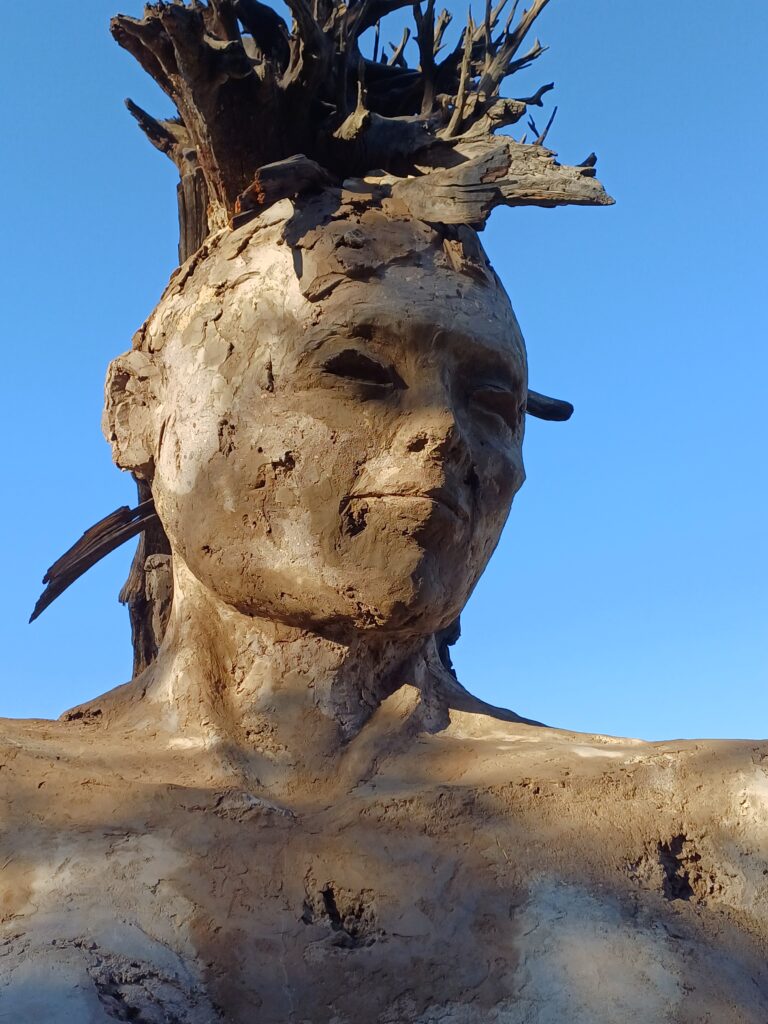
Hanneke — front view
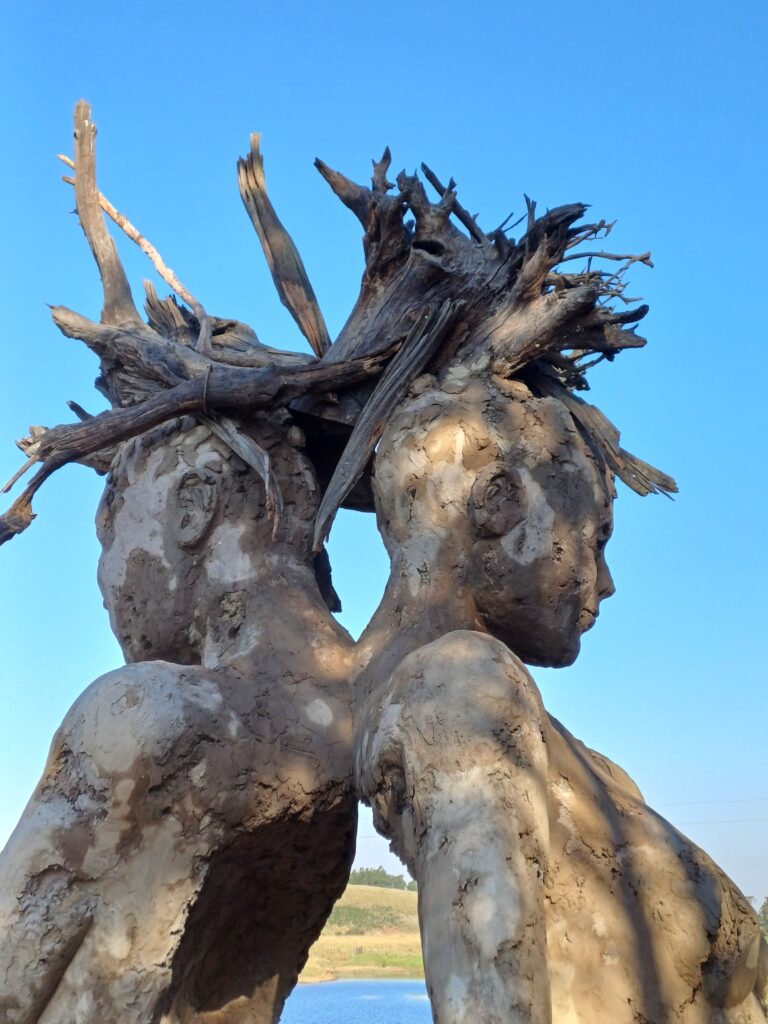
Hanneke — side profile
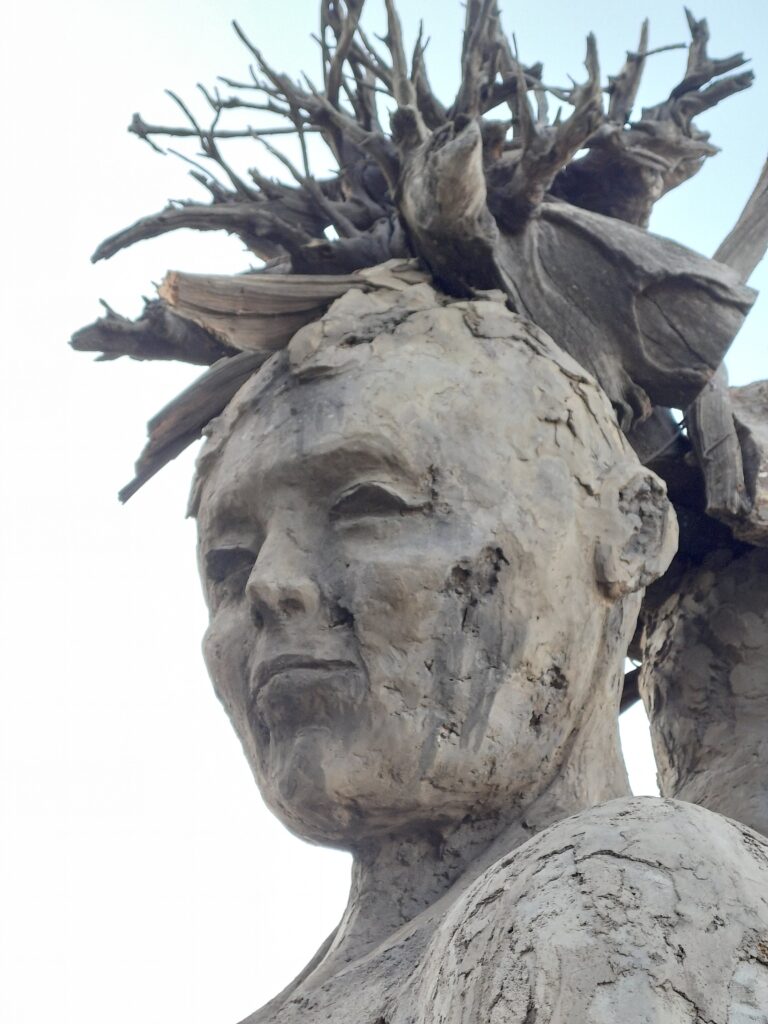
Hanneke — three-quarter view
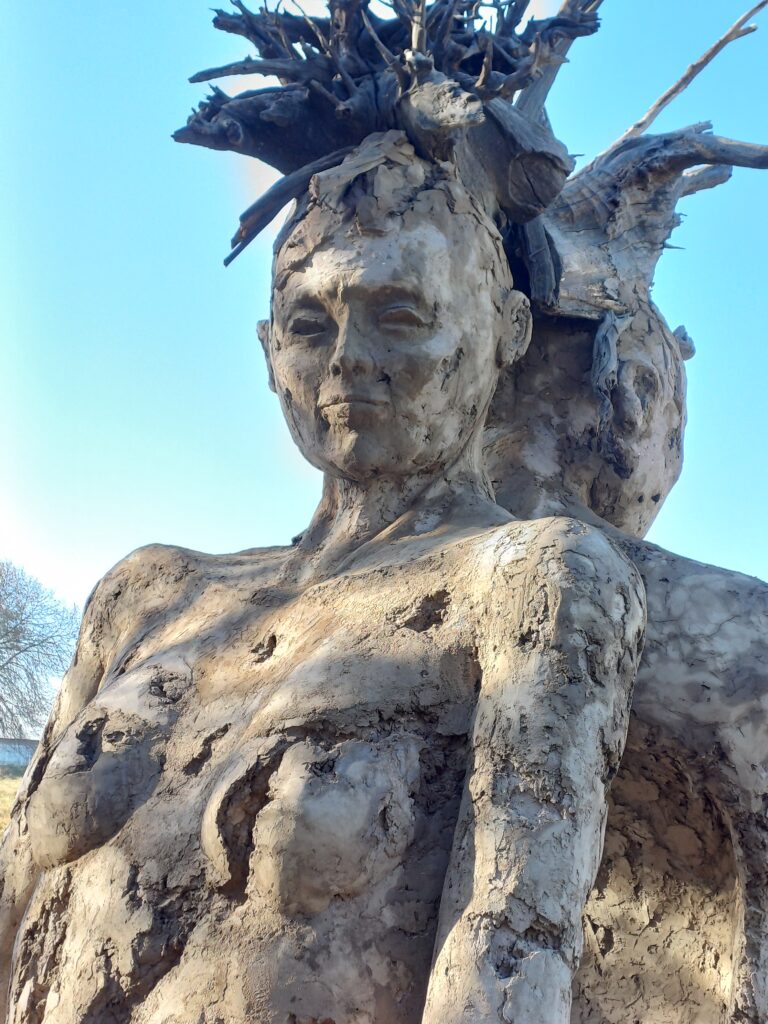
Hanneke — crown detail
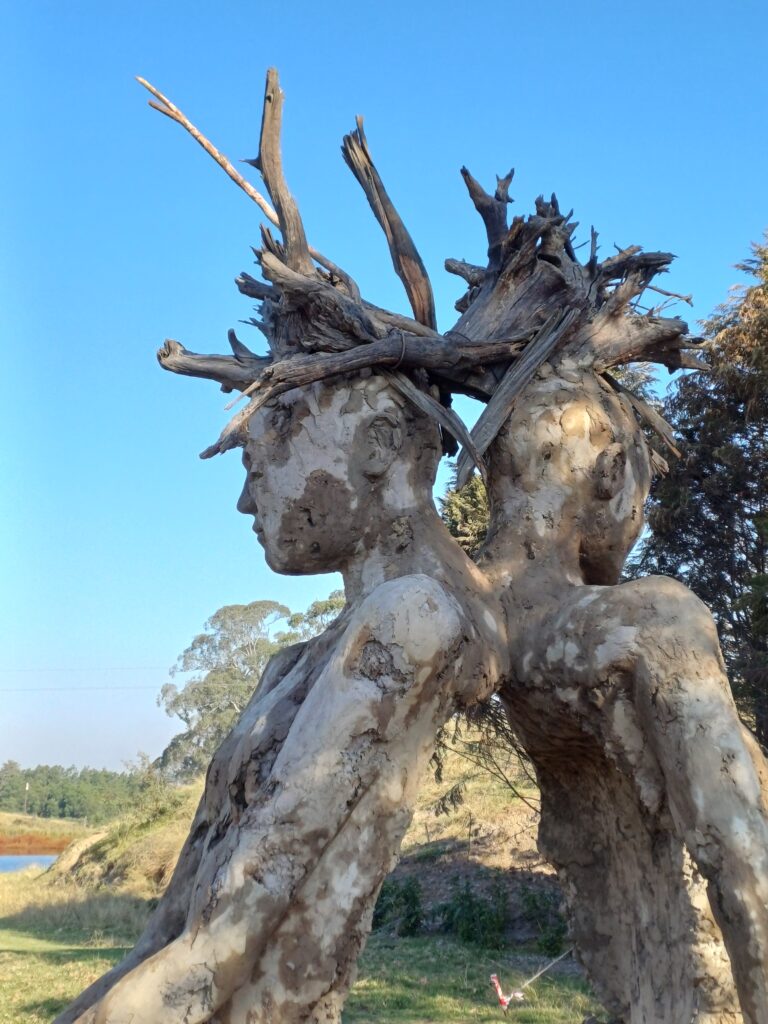
Hanneke — shoulder detail
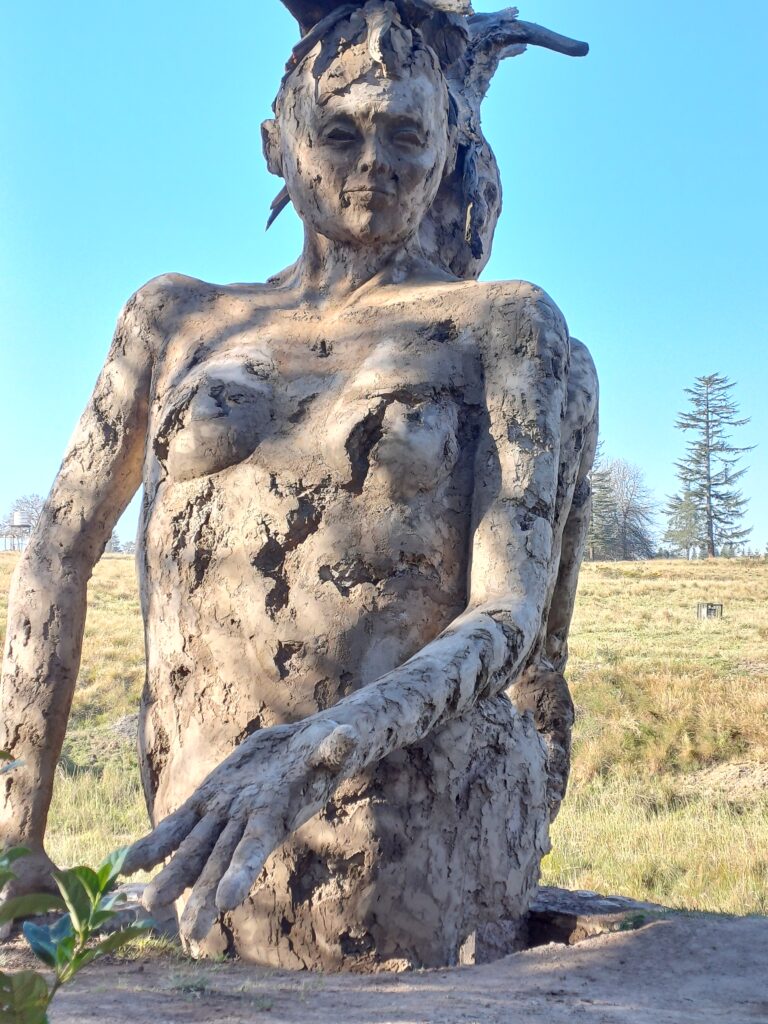
Hanneke — back view
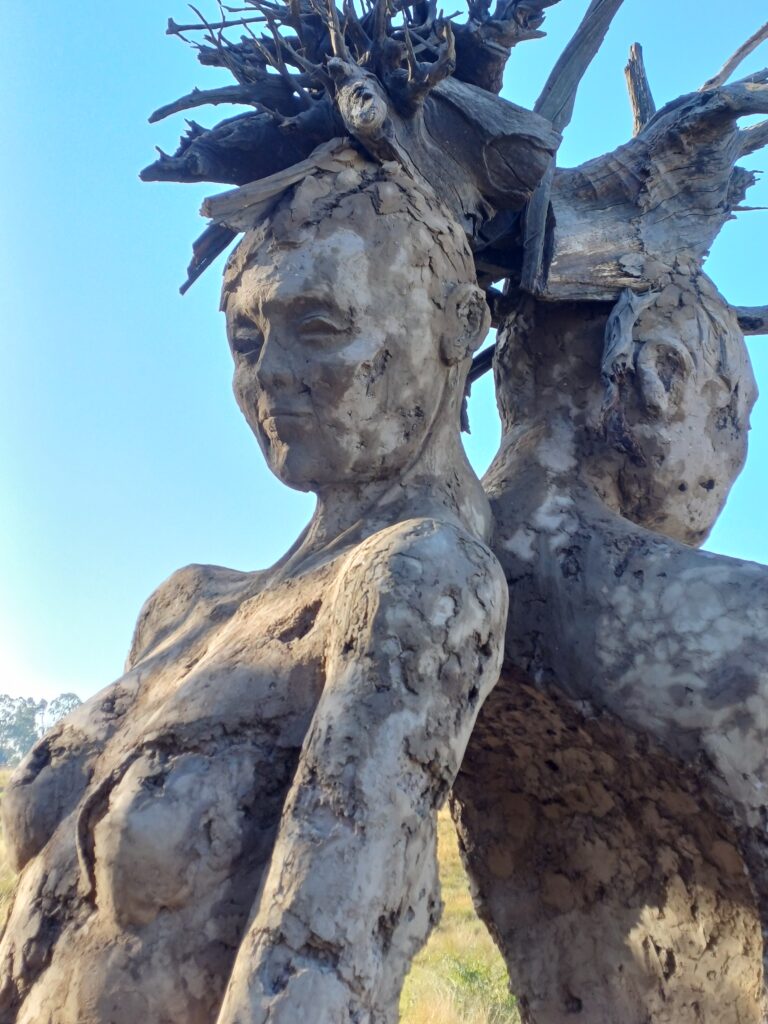
Hanneke — close detail
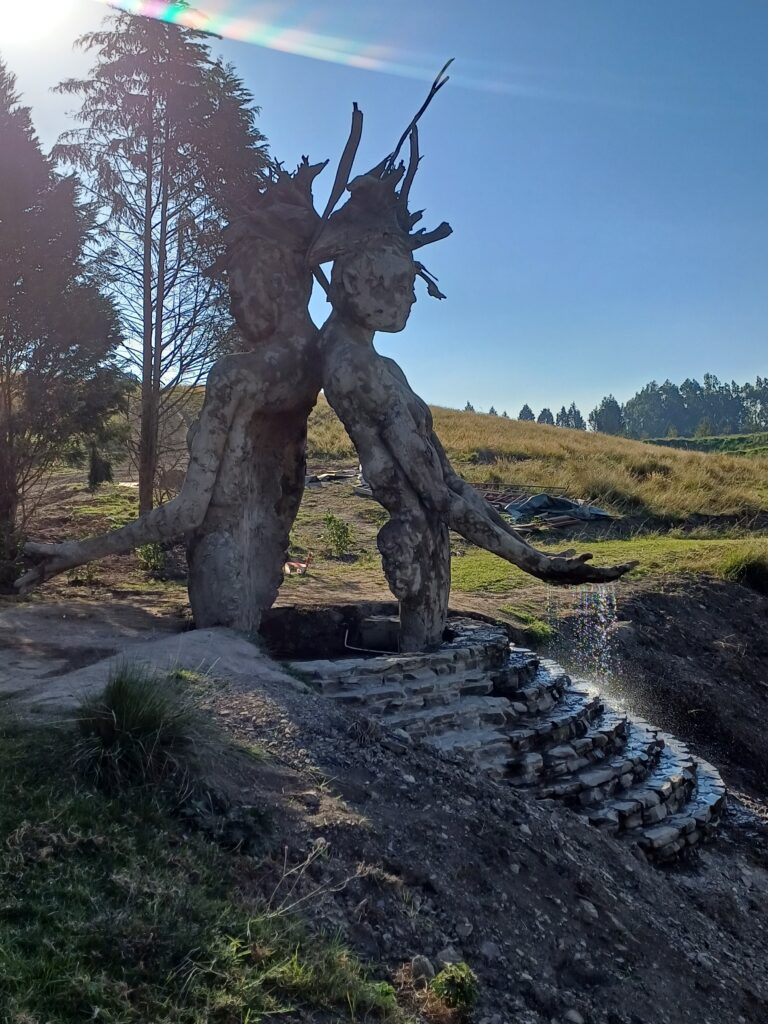
Hanneke — in situ
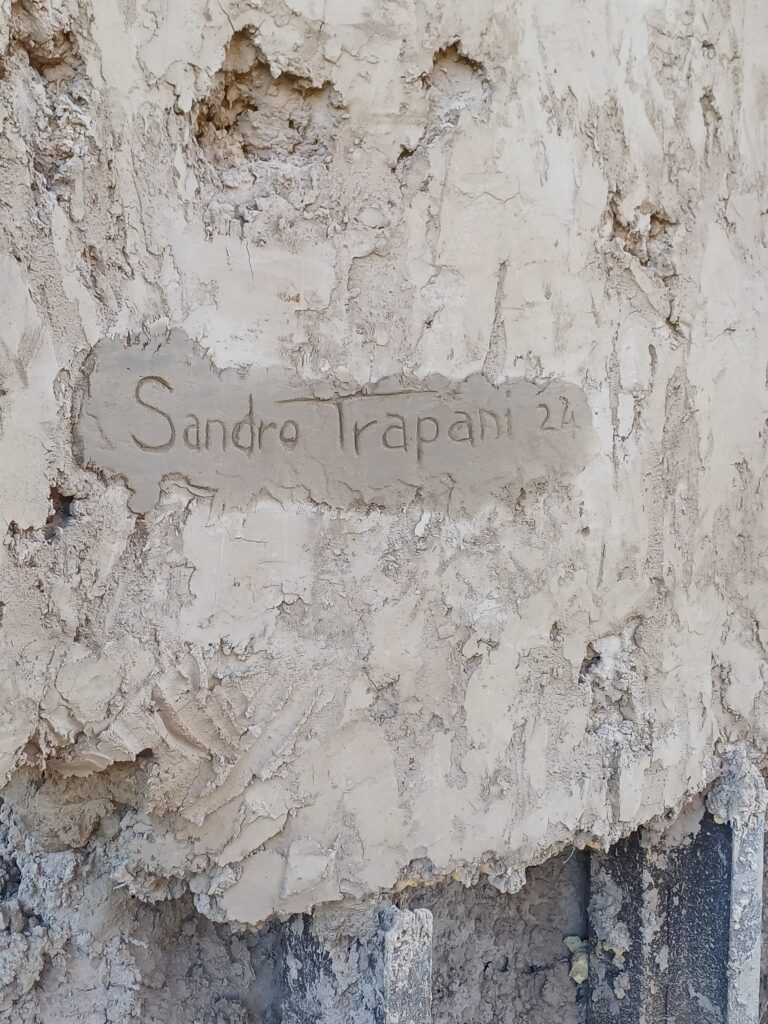
Hanneke — signature detail