SCULPTURE
Medusa
“You strike a woman, you strike a rock.”
— from a song sung at the Women’s March, Pretoria, 1956
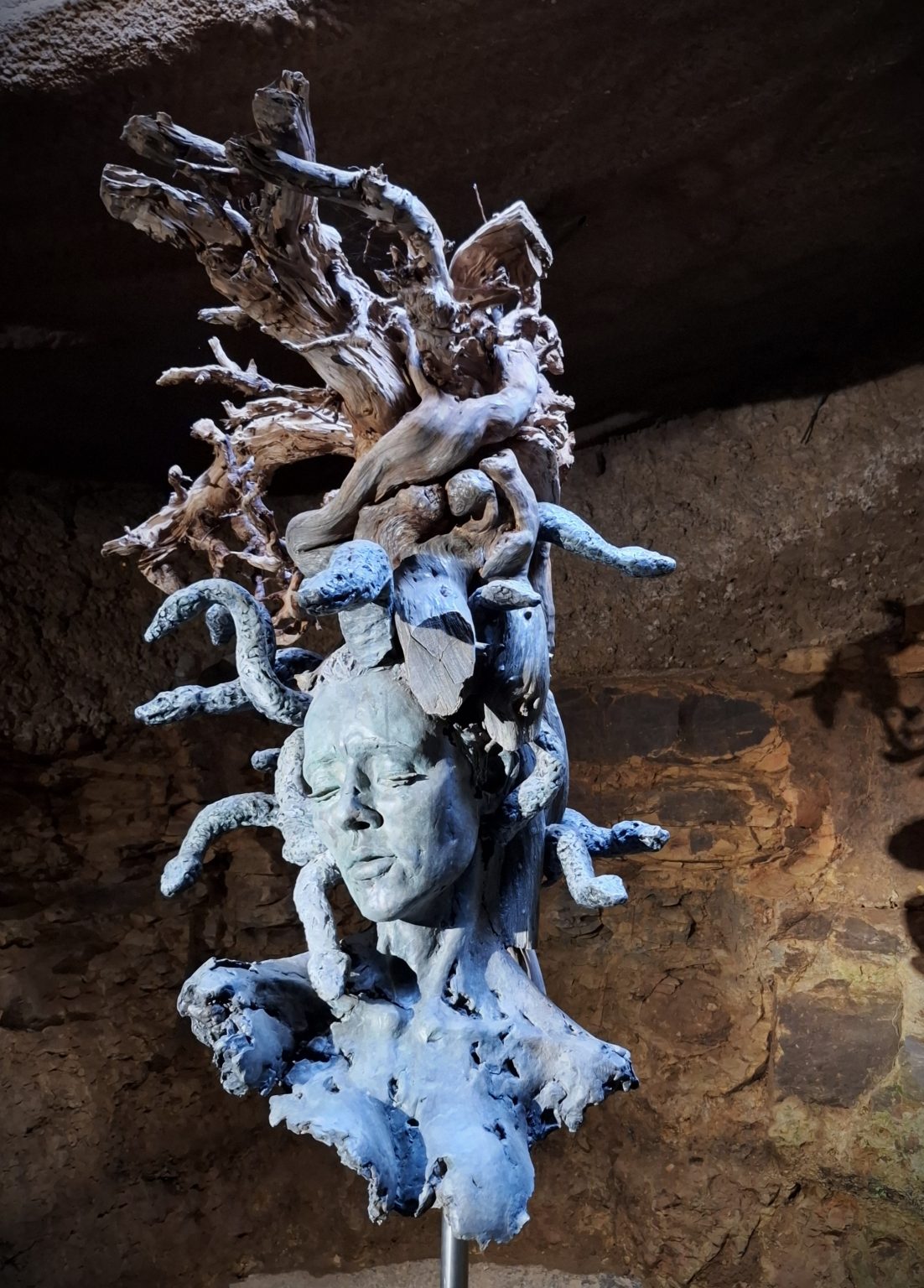
In myth, anyone who looks upon Medusa turns to stone. Ancient writers, mostly men, cast her as a monster. Trapani portrays her as more person than monster. Her returning gaze holds the power to stop her attacker.
The sculpture captures the moment just before Perseus strikes. Her sorrow outweighs her fear of death. She grieves for all women who suffer a violent end.
Yet in the myth, her death is not her end. Perseus uses her power for his own gain and for favour with the gods. Medusa becomes a symbol of a powerful woman silenced because she threatens male authority.
Simone de Beauvoir wrote that “one is not born, but becomes a woman”, shaped by the roles society expects. Medusa was never given the freedoms her male counterparts enjoyed.
In the sculpture, her fate rests with the viewer, who chooses how her story ends.